Looking to broaden your musical world? Then look no further...
Here at Orchestras for All, we truly champion equality, diversity and inclusion, whether that’s relating to the young musicians we work with or the music they perform.
That’s why this Black History Month we’re taking a moment to celebrate the powerful musical contributions of Black composers throughout music history.
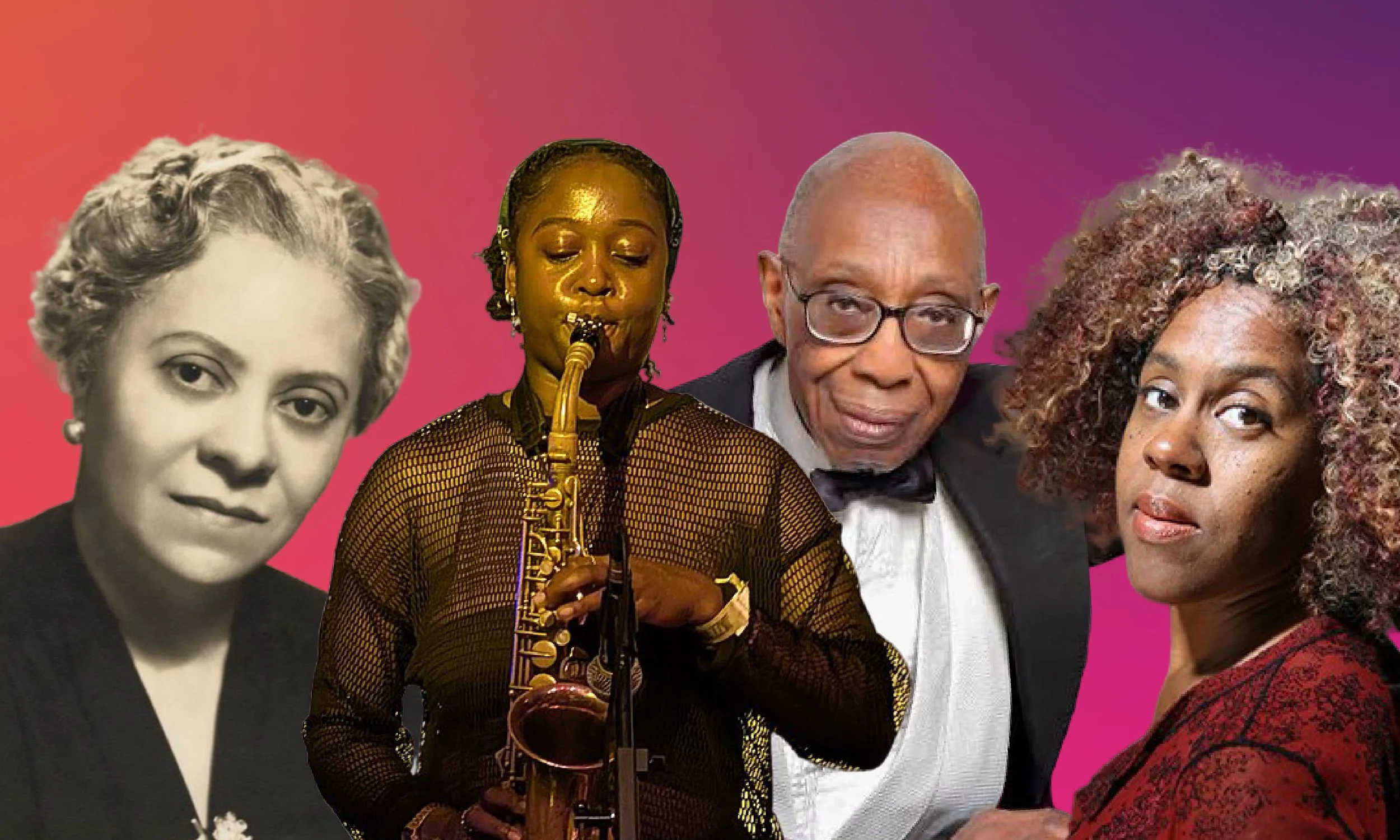
From classical pioneers to modern genre-blenders, here are eleven inspiring composers who reshaped the world of music as we know it (and trust us, you’ll want to add them to your next playlist…)
Read more: Supporting the next generation: why mental wellbeing is more important than ever
1. Florence Price (1887–1953)
Florence Price made history as the first African American woman to have her work performed by a major U.S. orchestra. Premiering in 1933, her Symphony No. 1 in E minor blends African American spirituals, Western classical forms and vibrant rhythms.
This year, the young people in National Orchestra for All and our Modulo ensembles performed the spectacular ‘Allegro ma non troppo’ (first movement) from this symphony at arts venues nationwide, embracing Price’s groundbreaking legacy and keeping the work relevant today.
2. Errollyn Wallen CBE (b. 1958)
Errollyn Wallen CBE is a Belize-born British composer whose work defies traditions. Not only is she a trailblazer in the classical world, being the first Black female composer to have her work performed at the BBC Proms (Concerto for Percussion, 1994), but she is also an accomplished singer-songwriter.
Wallen’s music spans a vast range of genres, from opera and chamber music to pop songs, blending classical traditions with influences from jazz, blues and contemporary styles. Earlier this year, Wallen also became the first Black woman to be proudly appointed as Master of the King’s Music.
In an interview with the Scottish Chamber Orchestra, she said: ‘Anyone from anywhere can be a composer. If, along the way, I have helped to dispel the myth that a composer is only white and male, that can only be a good thing.’
Plus, music runs in the family as Errollyn’s brother, Byron Wallen, is also a distinguished jazz trumpeter, who previously led one of our Modulo workshops to share his passion for brass instruments and rhythm with the young people participating in the programme!
3. William Grant Still (1895–1978)
Often referred to as the “Dean of African American Composers” due to all the firsts he achieved, William Grant Still composed over 150 works, including symphonies, operas, ballets and chamber music.
Blending classical forms with blues and jazz, Still’s invigorating Afro-American Symphony (1930) was the first symphony penned by a Black composer to be performed by a major U.S. orchestra.
Read more: 2025-26 NOFA highlights from a NOFA member
4. Cassie Kinoshi (b.1993)
Ensemble Intercontemporain’s performance of ‘[UNTITLED]’ by Cassie Kinoshi.
Cassie Kinoshi is a Mercury Prize-nominated and Ivors Academy Award-winning composer, arranger and alto-saxophonist. Her incredible genre-blending and multidisciplinary work covers everything from contemporary classical and improvised music to TV, film and even visual art.
As the leader of eleven-piece ensemble seed., she challenges conventions and creates music that celebrates identity, culture and storytelling.
In a recent interview with Southbank Centre, she spoke about her experience with the assumptions often made about her work: ‘In the European classical sphere, because I come from a background of playing the saxophone, playing Black American improvised music – which some would call jazz. People assume that everything I write in the European classical sphere is going to be like ‘jazzy’, but I actually also very much enjoy writing more abstract, more experimental, more floating kind of music as well.’
She also shared: ‘Artists of colour, but in particular Black artists, there’s kind of an assumption that all of your work will be related to trauma, but there are so many other layers to talking about your heritage and your relationship with the world as well.’
Kinoshi’s ‘the colour of all things constant’is a beautiful piece written for the BBC Ten Pieces, and co-commissioned by the BBC together with the ABRSM,Music for Youth and Royal Albert Hall. It was first played by the BBC Philharmonic Orchestra and included a powerful 40-strong choir of 16-18-year-olds.
5. Margaret Bonds (1913–1972)
‘The Montgomery Variations’ by Margaret Bonds performed by the National Youth Orchestra.
Margaret Bonds was a composer and pianist whose music was deeply rooted in African American spirituals and activism. Bonds was the first African American woman to perform with the Chicago Symphony Orchestra and was the featured pianist for the Woman’s Symphony Orchestra of Chicago’s performance of Florence Price’s Piano Concerto in D Minor.
She also collaborated with poet, Langston Hughes, and wrote powerful choral and orchestral works, advocating for social justice through music.
Her composition ‘The Montgomery Variations’ has previously been featured as one of the BBC’s Ten Pieces. Written in response to the Montgomery Bus Boycott, a huge protest brought about by the brave actions of Rosa Parks, the piece is an incredible example of Bonds dedication to social activism and support of Black women at a time of segregation.
6. George Walker (1922–2018)
Pianist and organist, George Walker, was the first Black composer to win the Pulitzer Prize for Music and in 1996, he was awarded for his dramatic work, Lilacs, written specially for soprano or tenor and orchestra.
Walker’s musical style blends classical, modernist and African American elements, and he is known for composing across multiple genres – from full-scale orchestral works to solo piano pieces, showcasing the breadth of his skill.
7. Joseph Bologne, Chevalier de Saint-Georges (1745–1799)
Joseph Bologne, Chevalier de Saint-Georges, was a virtuoso violinist, conductor, composer and soldier of Afro-Caribbean and French descent.
Born in the French colony of Guadeloupe, Bologne had an extraordinary life. He was a prolific composer, writing symphonies, operas and chamber music, which led to him becoming one of the most celebrated musicians in 18th-century France.
Today, Bologne’s vast catalogue of music, which includes the sweet-sounding ‘Trois Sonates’ for keyboard and violin (1770), continues to inspire musicians and audiences worldwide. His life as a composer and swordsman is the stuff of legend – so much so, it was portrayed in the 2022 film, ‘Chevalier’, marking him as one of the earliest and most inspiring Black figures in classical music history.
8. Samuel Coleridge-Taylor (1875–1912)
A British composer of Sierra Leonean descent, Samuel Coleridge-Taylor was a major figure in early 20th-century music.
While perhaps best known for his stunning work, Hiawatha’s Wedding Feast (1898), which brought him international fame, Coleridge-Taylor also used his platform to advocate for racial equality and celebrate African heritage.
His compositions merge classical traditions with African rhythms and melodies – an approach we also like to take at Orchestras for All as we embrace different cultures and genres in our repertoire to reflect the diversity of the young musicians we support.
9. Shirley J. Thompson OBE (b. 1958)
Shirley J. Thompson OBE is a British composer, conductor, violinist and academic of Jamaican descent, renowned for her orchestral works, film scores and operas as well as for being a cultural activist.
Thanks to her striking 21st century symphony, New Nation Rising (2002), celebrating London’s diverse histories through thematically linked movements, Thompson made history as the first woman in Europe to have composed and conducted a symphony within the last 40 years.
In 2002, the work was even performed live in the UK by The Royal Philharmonic Orchestra to mark the Queen’s Golden Jubilee!
Read more: A look back on the 2025-26 NOFA season
10. Ignatius Sancho (1729–1780)
British composer, writer and abolitionist, Ignatius Sancho, was one of the first people of African descent known to have voted in a British election in 1774. Though born on a slave ship, Sancho eventually became a free man and prominent figure in London society. He composed a collection of music for dance, including minuets, cotillions and country dances.
Sancho’s compositions, including ‘Sweetest Bard’ and ‘Friendship Source of Joy’ (1769), offer a rare glimpse into the life of a Black composer in 18th-century Britain, making him a significant figure in both music history and the abolitionist movement.
11. Courtney Pine (b. 1964)
Courtney Pine is one of the UK’s most celebrated jazz musicians and composers. Over the course of his career, Pine has revolutionised the British jazz scene, blending this musical genre with reggae, hip-hop, drum and bass as well as soul to create a distinctive and powerful sound.
His impressive work as a composer spans everything from big band jazz to smaller ensemble pieces, with albums such as Journey to the Urge Within having earned critical acclaim worldwide.
Pine’s dedication to pushing boundaries in music, while also staying true to his heritage, has made him a key figure in British music today.
At Orchestras for All, we continue to take inspiration from composers of all backgrounds when collaborating on new programmes of repertoire, empowering the young people we work with to take ownership over their learning, explore their creativity and embrace different cultures and genres within a welcoming and supportive setting.

